The decision in one sentence
Walk up if the climb itself is part of the day you want and everyone can manage the descent; choose a cable-car-based visit if preserving energy for the wall matters more. Neither choice commits you to the longest possible wall walk. Set a turnaround before you set a tower target.
Place label: Mutianyu Great Wall · 慕田峪长城. This guide is about the physical shape of your outing, not a ticket-bundle comparison. For that separate decision, use our Mutianyu return-ticket guide.
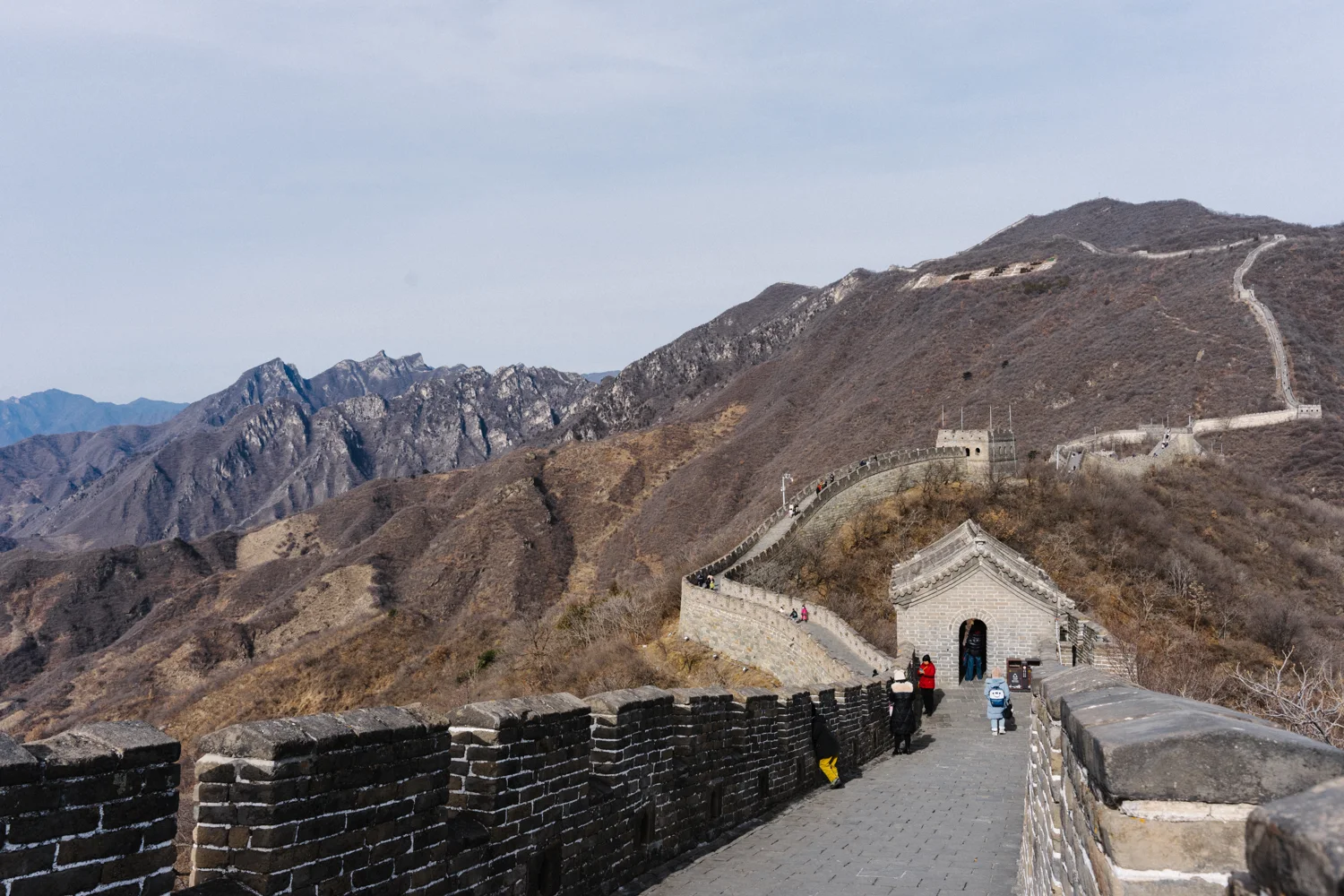

Choose the effort you actually want
Walk up and back down
Best for a group that enjoys hill walking, has no reluctant participant and can shorten the route without disappointment. Count the approach and descent as part of the outing, not just the time spent on the wall.
Ride, then take a limited wall walk
Best when looking after children or saving energy is the priority. A ride reduces the approach climb; it does not make the wall flat or remove the need to get back to your descent point.
Keep the visit deliberately short
Best when stairs, heat or fatigue are uncertain. Ask staff about the actual approach, boarding and return before committing. A shorter outing is not a failed version of a longer one.
For a parent managing two children alone, a cable-car round trip can preserve energy for the wall; for regular hill walkers, the climb itself may be worthwhile. Choose by your group’s stamina, not a universal walking-or-riding recommendation.[1][2]
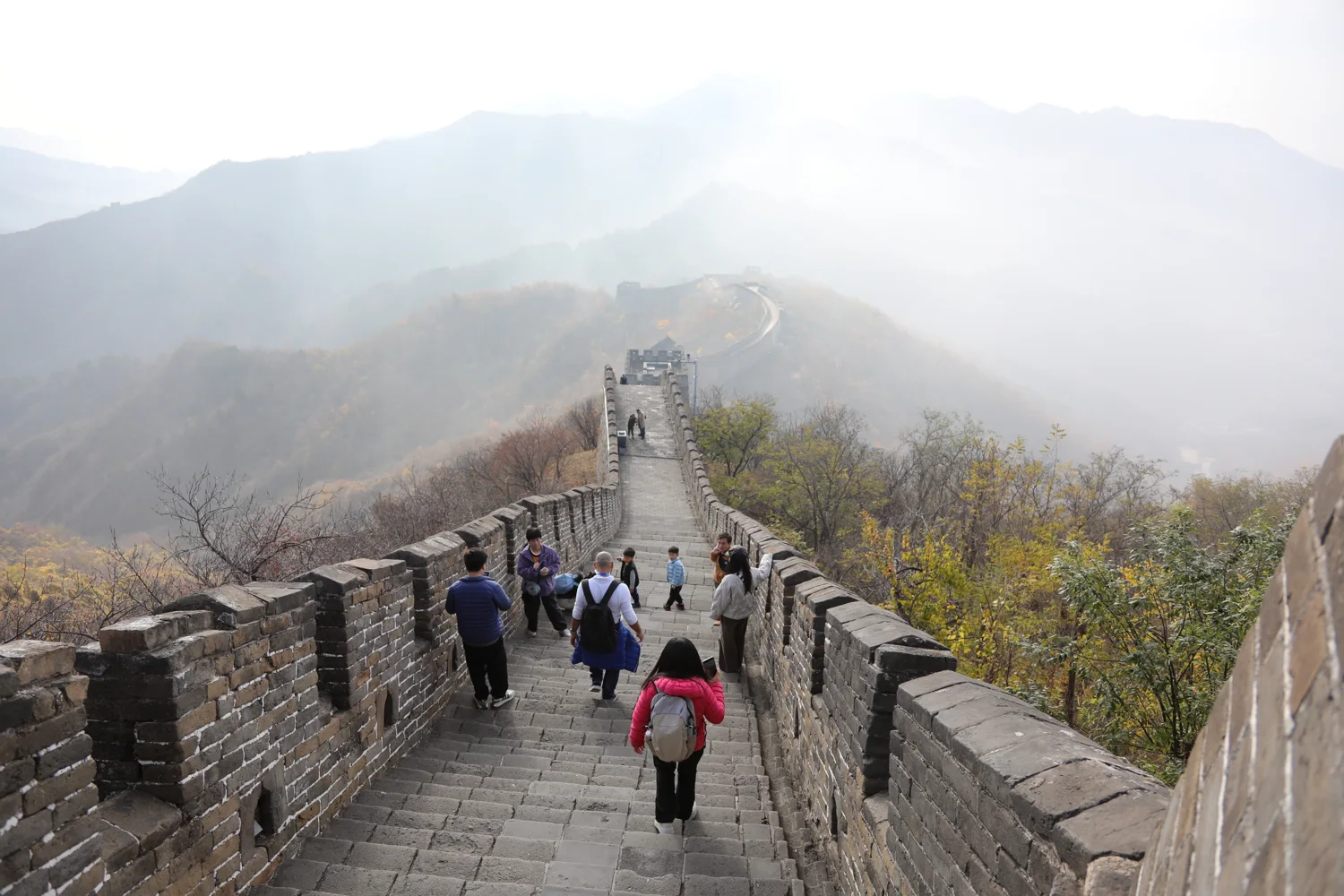
Walking: assess the descent as carefully as the climb
Do not use a brisk ascent as your group’s expected time. Allow for uphill access, changes of gradient on the wall and a tiring descent. If you need frequent stopping places, ask staff about the return path before choosing to walk both ways.[2]
Before starting, agree that the slowest person can call the turnaround. Wear shoes you already trust on stairs, carry water and pause before adding a distant stretch. If the descent is what usually troubles your knees or confidence, saving money on the ascent may not be a useful trade.
A good walking plan has a small core route and optional extensions. Do not make an advertised endpoint compulsory, and do not cross barriers to complete a saved itinerary. Ask staff which sections are open today; the operator warns that severe weather can cause partial or temporary closure.[3]
_34.jpg)
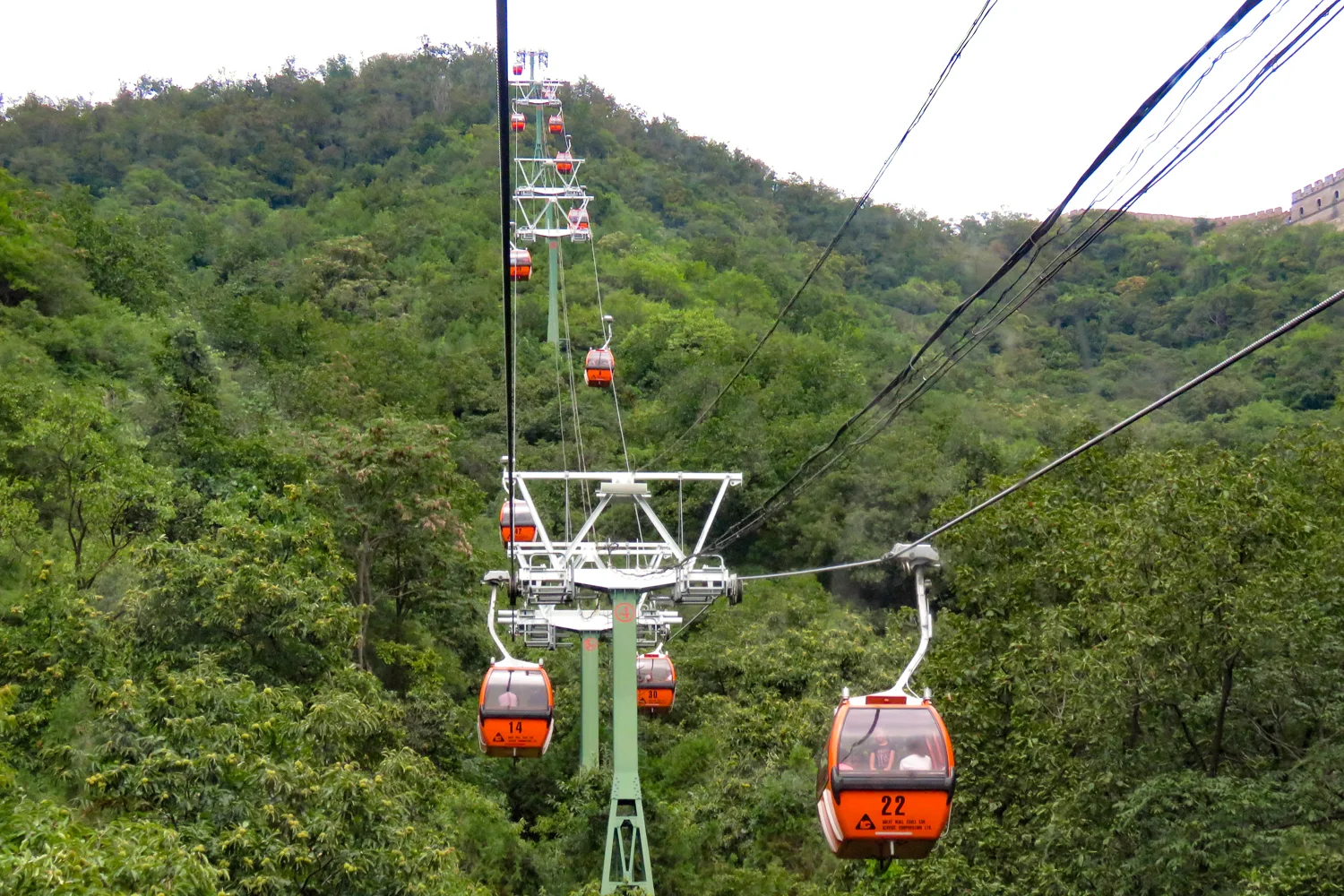
Cable car: spend the saved energy on a smaller wall visit
Use a manageable out-and-back walk anchored to the same cable-car system. Keep the tower target optional, and check your own family’s admission and ride eligibility separately.[1] Do not assume that all children under eighteen enter free: the operator distinguishes foreign minors from the free-admission category for Chinese citizens.[3]
On arrival, confirm where you will descend and the operating cutoff. Walk only as far as you can comfortably return. If your group splits, agree on a meeting point before anyone leaves, and keep the booking details available to each subgroup.
The cable car and the ropeway/slide have separate tickets that are not interchangeable. A cable-car round trip is not a spare slide ticket.[3] Decide whether you want a hillside ride or a walking day first; then buy the product that matches the return you intend to use.
.jpg)
Do not choose the slide solely for speed or excitement
If excitement is the main reason to choose the slide, allow for a slower ride behind other riders; a fast, uninterrupted descent is not guaranteed.[2] If the slide is only an assumed shortcut, reconsider whether a straightforward return matters more than the novelty.
For children, ask the operator about the current age, height and accompanying-adult rules for the specific ride. Do not borrow eligibility rules from comments or assume that a child allowed on a cable car is allowed on every other ride.
A flexible plan for your group
- Agree whether the climb or the wall view is the main goal.
- Check current weather, open sections and the intended descent before paying for rides.
- Choose a short core walk; extend only while everyone still has comfortable energy for the return.
- Stop adding towers when the return starts to feel uncertain.
- Keep the original passport used for booking and a saved transport meeting point.
The operator requires foreign-passport bookings to be checked against the original reservation document.[3] This guide does not promise walking times, step-free access, a particular crowd level or that all rides will run.
Sources and image credits
Checked 3 October 2026. Individual experiences are not representative or guarantees; official guidance governs admission. No visit or booking was tested.
- Dajin Zi: cable-car family visit — original post and visible comments; publication date not independently verified.
- Yiya Yiya Yo: walking visit — original post and visible comments; publication date not independently verified.
- Mutianyu scenic area — official visitor guidance — published rules; recheck before travel.
Photo dates, authors, public sources and Commons licence terms appear beneath each image. Images are historical context, not current operating evidence.