Choose a priority, not a completion target
For a short visit, pick one collection you genuinely want to see and make other rooms optional. For a deeper visit, spend your attention on fewer objects and their interpretation. Trying to cover every level is a third option—but it often leaves less time for the art you came to understand.
Place label: Shanghai Museum East · 上海博物馆东馆. This guide is about allocating attention inside East. Use our branch-choice guide if you are still deciding between East and People’s Square.
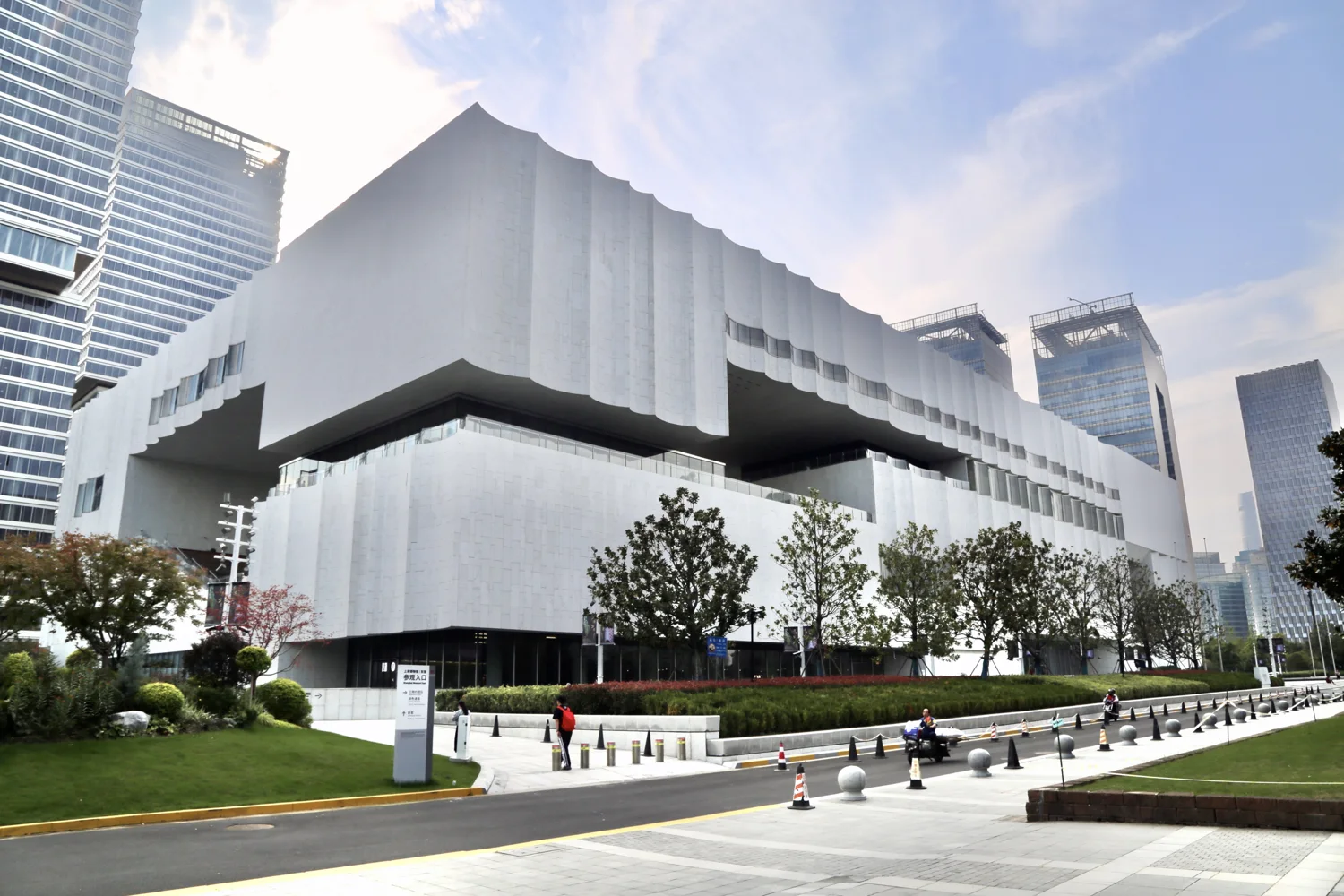

Three useful ways to use your visit
A brief introduction
Pick one priority gallery and one optional room. If a queue consumes the available visit, switch the order or choose the optional room. Do not promise yourself the whole building.
One gallery in depth
Choose the collection that interests you most. Use labels or an English audio guide, compare a few objects and leave room to revisit one rather than rushing onward.
A family visit
Let each person pick something they want to find. Stop before attention is exhausted. Interactive spaces are separate planning decisions, not automatic additions to ordinary entry.
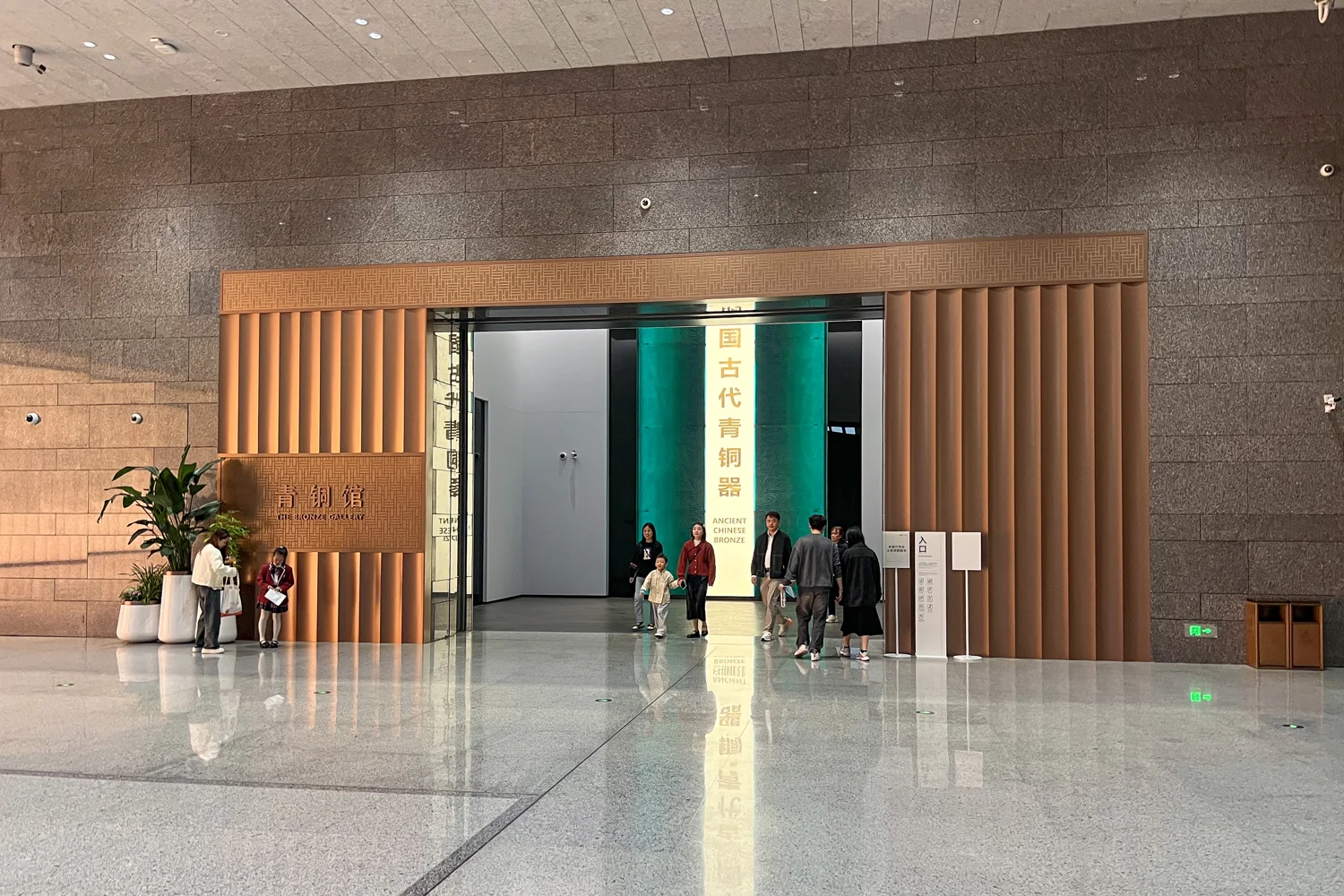
A brief circuit offers breadth; a collection-focused visit gives you more time with the objects. If bronzes are your priority, do not automatically head upstairs just because the entrance is busy.[1] The useful choice is breadth versus attention, not whether you can reproduce one person’s pace.
Use a queue to change the order, not the goal
If your priority gallery is busy, ask about the likely flow and decide whether to wait or return later. Do not count on a quieter gallery later in the day; reassess the actual queue.[1] The museum explicitly allows temporary gallery-level flow control when capacity is reached.[3]
Keep a second choice nearby on the current museum map. Check access before using a rooftop or cross-floor shortcut; follow the current map and open doors. If stairs are a concern, ask for the lift route before following the crowd.
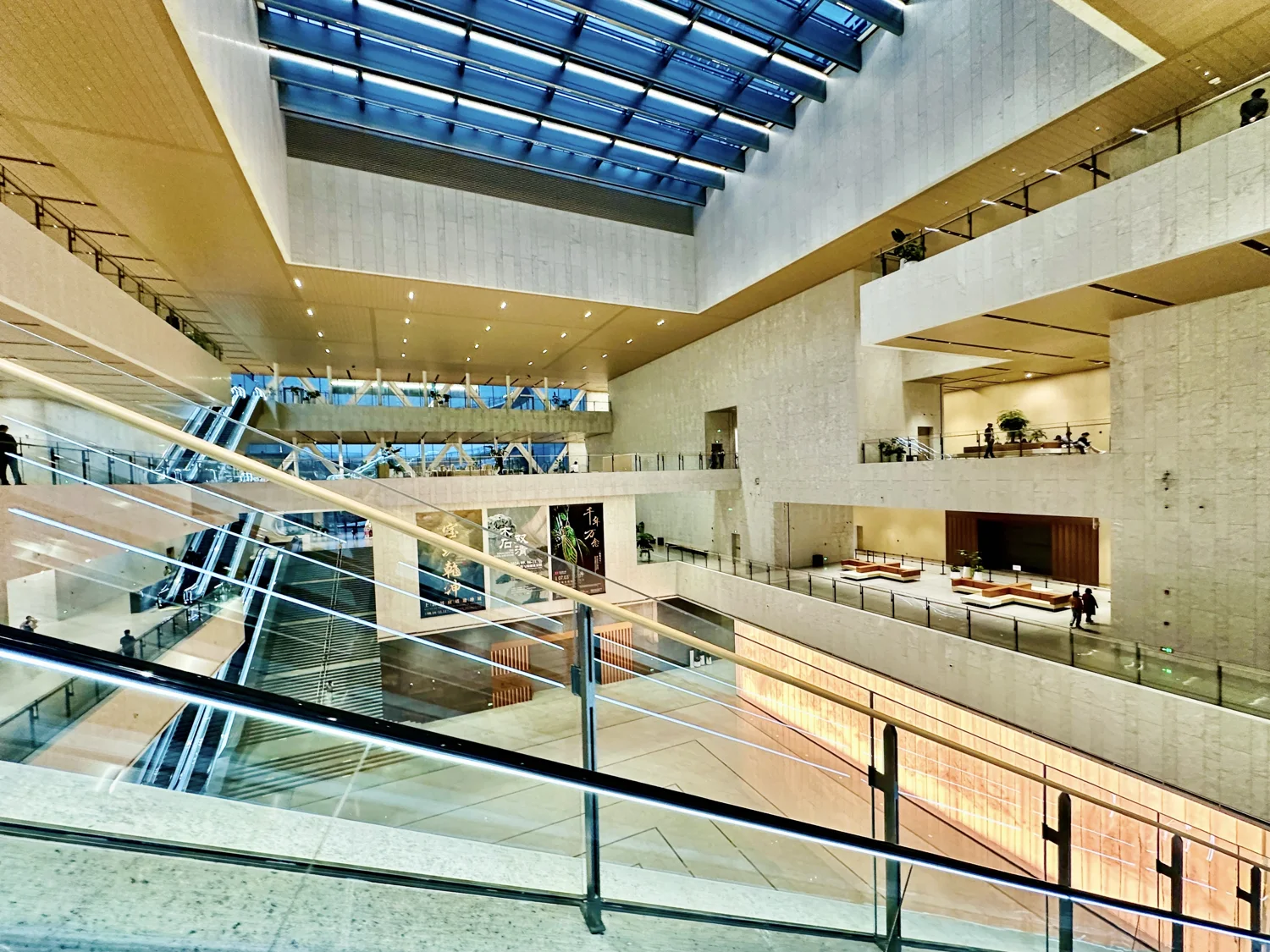

For English readers, interpretation is worth planning
Start with the current floor map and your collection priority. The museum lists English audio guides for permanent exhibitions; special-exhibition guides are separate.[3] Ask at the desk which service covers the rooms you intend to see, rather than renting a device only after you have rushed through them.
Choose a handful of objects to examine properly. Read the object label, look again, and compare materials or details with another object nearby. This is a practical way to make a limited visit meaningful without treating a list of famous objects as homework.
If visiting with children, choose by curiosity rather than a generic must-see ranking. Match the gallery to your child’s age and interests. Treat a paid guide’s recommendations as a proposed itinerary, not museum policy.[2]
.jpg)
Keep ordinary entry and extras separate
The official East guide says individual entry does not require a reservation, with original valid identity documents checked after security at the B1 East Gate near Dingxiang Road. Bring your original passport and ask staff how to complete verification if a domestic ID reader is not suitable.[3]
The Curio-City and Digital Gallery still need advance reservations, while ticketed special exhibitions have their own arrangements.[3] A full interactive session does not mean you have no worthwhile museum visit; retain the collection-focused plan as your fallback.
Check today’s opening notice and last entry before travelling. Do not equate closing time with the latest possible arrival, or borrow a People’s Square schedule for East.
Take a proper break, and respect gallery rules
The museum confines eating and drinking to designated areas and prohibits it in galleries, corridors and lobbies. It also prohibits flash, selfie sticks and tripod-type equipment, with additional photography restrictions for some exhibitions.[3] Follow the signs and staff instructions before photographing exhibits.
Use the current map to find a suitable break location and return to your main collection if you still have attention to spare. You do not need to add the shop, roof or every floor to justify the journey.
- Choose one collection priority before leaving the hotel.
- Bring your passport and check today’s entry arrangements.
- Ask about English interpretation and any separate exhibition or activity booking.
- Use an optional room if your priority is temporarily busy.
- Finish when the group has had a satisfying look, not only after every room is ticked off.
Sources and image credits
Checked 3 October 2026. Individual experiences are not representative or guarantees; official guidance governs admission. No visit or booking was tested.
- Carol: short museum visit — original post and visible comments; publication date not independently verified.
- Tie Sudan: museum-entry discussion (also promotes paid tours) — original post and visible comments; publication date not independently verified.
- Shanghai Museum — official visitor guidance — published rules; recheck before travel.
Photo dates, authors, public sources and Commons licence terms appear beneath each image. Images are historical context, not current operating evidence.