China trains do not apply an airline-style 100ml rule to every toiletry. Ordinary shampoo, shower gel, facial cleanser and makeup are permitted. Listed pressurized aerosols have a 150ml container limit, one item of each type, 600ml combined; specified flammable non-pressurized toiletries have a 100ml container limit, one of each type. A partly empty oversized bottle is not a workaround. Leave unnecessary knives out of your luggage.[2][3]
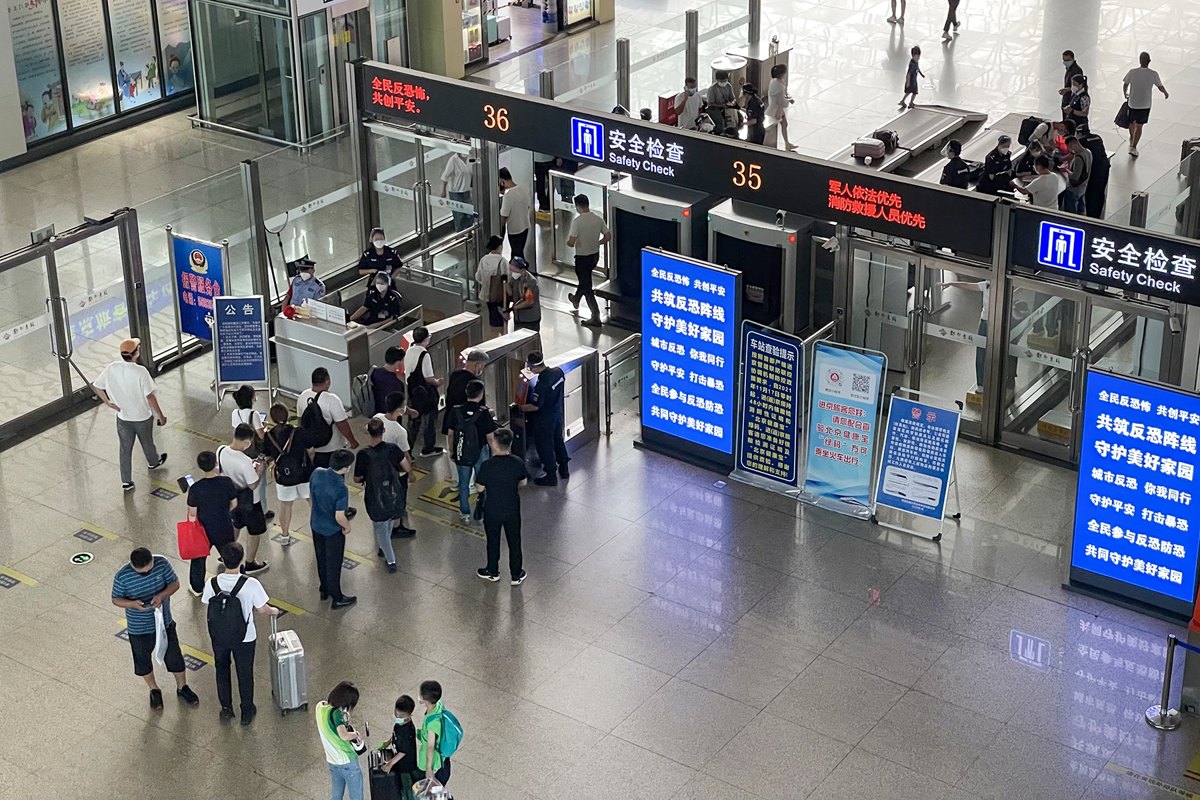

1. Shampoo, makeup, perfume or aerosol? Use this packing table
Check the product, ingredients and container, not just whether it is a liquid or has a spray nozzle. The national catalogue distinguishes ordinary toiletries, products containing flammable ingredients and self-spraying pressure containers; the August 2026 packing Q&A explicitly permits ordinary wash products and makeup.[2][3]
| Item | Rule or answer | What to do |
|---|---|---|
| Ordinary shampoo, shower gel, face wash | Permitted; the guidance does not impose a blanket 100ml limit on these ordinary products. | A normal 250ml shampoo is not disallowed simply because it exceeds 100ml. Check it is an ordinary wash product, not a special flammable or pressurized formulation. |
| Ordinary foundation, primer, lipstick, mascara | The Q&A names these as permitted daily-use cosmetics. | Do not assume every item in a makeup bag is restricted—or that permission for lipstick also covers perfume and nail-polish remover. |
| Listed pressurized toiletries | ≤150ml per container; one of each type; ≤600ml total. | Read the can capacity and count types. This category includes sunscreen sprays, hairspray, mousse and air freshener. |
| Flammable non-pressurized perfume, floral water, sprays and gels | ≤100ml container; one of each type. | A pump nozzle alone does not make a product unrestricted. Keep ingredients and capacity readable. |
| Nail polish and polish remover | ≤50ml combined. | Count them together, separately from the other toiletry categories. |
| Sealed, clearly labeled alcoholic drinks at 24–70% ABV | ≤3,000ml combined; the endpoints are included. | Keep packaging sealed and strength identifiable. Drinks over 70% or with unclear markings are prohibited. |
| Everyday knives/scissors with blade longer than 60mm | No carry-on; eligible for consignment under the catalogue. Controlled knives are prohibited both carried and consigned. | Do not treat a locked suitcase as checked luggage. Arrange any lawful consignment before travel. |
This guide covers the mainland national-rail baseline, not airline, metro or cross-border rules. Packing permission also does not cancel the separate luggage size/weight rules: see China train luggage limits and storage.
2. Aerosol deodorant and sunscreen: read the can, not what is left
The national catalogue names self-spraying pressure-container products including mousse, hairspray and air freshener. The August Q&A expressly includes sunscreen sprays and says the capacity printed on the packaging is the standard: 150ml maximum per container, one item of each type, 600ml maximum combined.[2][3]
A 200ml aerosol that is half empty still has a 200ml container. The combined 600ml allowance does not override the individual 150ml cap or the one-of-each-type condition. Four different eligible 150ml products meet the numeric ceiling; two cans of the same type do not meet the one-of-each-type rule.[2][3]
For aerosol deodorant, shaving foam or dry shampoo, do not copy an airline limit or assume “toiletry” means unlimited. If the product is a pressurized personal-care can, plan within the pressure-container limits and confirm the exact product if its classification is uncertain. The official catalogue does not name every deodorant formulation. A simple solid or ordinary non-aerosol alternative avoids carrying that ambiguous can.
A hand-pumped sunscreen or insect-repellent spray is not automatically unrestricted either: whether it contains flammable ingredients matters for the separate 100ml category. Do not decant an unknown formulation into an unmarked bottle just to make it look compliant.[2]
3. Perfume, makeup and shampoo: answer the specific question
Can I bring a 250ml bottle of shampoo?
Ordinary shampoo is explicitly permitted, along with shower gel and facial cleanser. The 100ml flammable-toiletry limit is not a blanket limit for normal shampoo. Keep its product label readable and the cap secure; if yours is an unusual treatment or spray formulation, classify that actual product rather than the word “shampoo.”[3]
Can I bring foundation and other makeup?
The Q&A expressly lists foundation, primer, lipstick and mascara as permitted. Check perfume, polish/remover, sprays and other unusual products separately; a makeup bag is not one regulatory category.[3][2]
Can I bring a partly used 120ml perfume bottle?
For perfume containing flammable ingredients in a non-pressurized container, the limit is a container volume no greater than 100ml, one per type. Do not argue from the remaining contents of a 120ml bottle. Choose a clearly labeled compliant bottle or leave it behind.[2]
Are alcohol wipes the same as liquid disinfectant?
No. The August Q&A permits disinfectant wipes and pads containing 75% alcohol, while saying industrial alcohol cannot be carried or consigned. That does not authorize a bottle of liquid alcohol or every sanitizer formulation. Identify the exact product and ask the railway when unsure.[3]
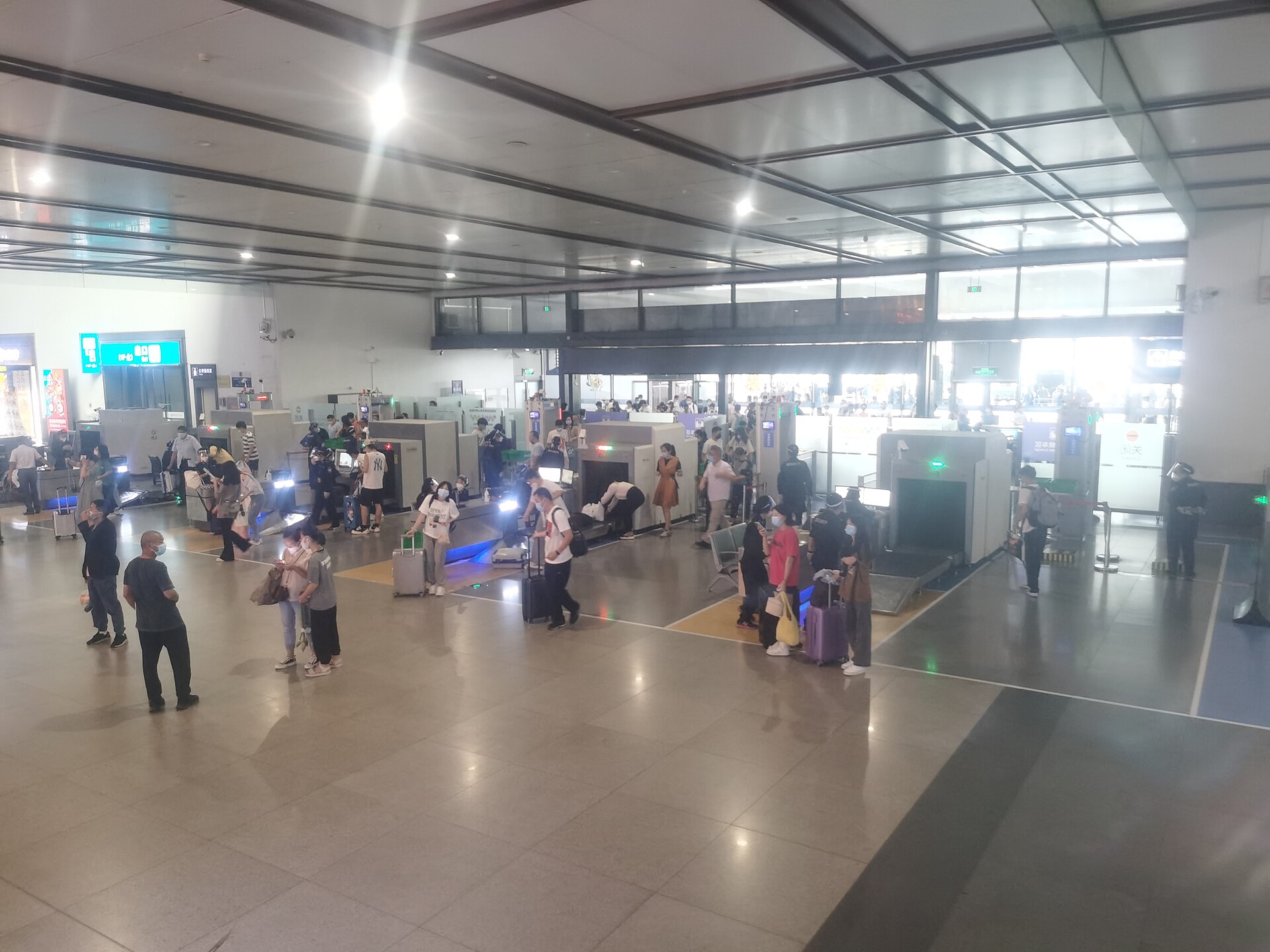

4. Utility knives and pocket knives: 60mm is not guaranteed permission
The catalogue places listed daily-use knives—including kitchen knives, fruit knives, scissors, utility knives, carving knives and paper cutters with blades longer than 60mm—in the no-carry-on but consignable category. Professional cutting tools are separately listed. Controlled knives are in the category prohibited both carried and consigned. Length is therefore only part of the classification.[2]
Do not read this as “any pocket knife under 6cm is safe.” A multi-tool can contain other implements; a utility knife must be assessed as the actual cutting tool, not only by its folded size or currently exposed blade. In a public tool-packing discussion, a traveler reported losing a Swiss Army knife despite a blade within the accepted dimension. Another thread asks whether chef knives can travel from Shanghai to Beijing; replies advise not putting them in the onboard luggage. These reports show practical risk, not a new nationwide rule.[7][6]
For an ordinary holiday, leave the knife and unnecessary cutting tools behind. If a tool is essential, show the railway a photograph, its function and blade measurements before the travel day. Ask whether lawful consignment is actually available for your journey; the catalogue’s “can be consigned” category does not promise a service on your specific station/train.
Your carry-on suitcase does not become consigned baggage because it is zipped, locked or too big for an overhead rack. Do not arrive with a valuable tool on the assumption that station storage, mailing or later collection will be offered.
5. At security: make inspection simple and avoid last-minute losses
The catalogue took effect on 1 July 2022 and replaced the old 2015 list. It also explicitly allows legally heightened controls in particular regions and periods. The national limits are a planning baseline, not a guarantee that every checkpoint will handle an ambiguous item identically.[2]
Before leaving your accommodation:
- Read every spray can’s printed capacity and check for flammable ingredients.
- Separate ordinary wash products, flammable non-pressurized products, pressure cans and polish/remover.
- Check the one-of-each-type rules and combined totals.
- Keep the label and container accessible for an inspection.
- Remove unnecessary knives and tools; resolve essential ones in advance.
If staff question an item, show its original label and follow the inspection instructions. Do not hide it, transfer it to another passenger or rely on arguing that a large bottle is almost empty. Ask what lawful options are available, but be prepared not to travel with the item.
For adjacent items, the catalogue also limits clearly labeled power banks/lithium batteries to 100Wh per unit, with an exception for electric wheelchairs containing lithium batteries. The rail catalogue does not state a general CCC-mark requirement; do not import domestic-flight power-bank rules into a railway packing claim.[2]

Before you go
- Ordinary shampoo and makeup are not all subject to 100ml.
- Listed pressure cans: 150ml each, one per type, 600ml combined.
- Specified flammable non-pressurized toiletries: 100ml each, one per type.
- Polish/remover: 50ml combined.
- Use container capacity, not an estimate of remaining contents.
- Do not count a short knife as guaranteed permission.
- Arrange any essential tool transport before reaching station security.
Sources & freshness
Checked 15 October 2026. Independent desk research, not a field test. No bookings or affiliate links. Community reports describe individual experiences, not operating rules.
- [2] Railway prohibited, restricted and consignable articles catalogue
China Railway 12306; National Railway Administration and Ministry of Public Security notice dated 17 May 2022, effective 1 July 2022. Live Chinese catalogue; national baseline with provision for legally heightened controls.
- [3] Summer rail packing Q&A (Shangguan/Jiefang Daily syndication)
Shangguan / Jiefang Daily, 18 August 2026. Retrieved full article text; explanatory Q&A on toiletries, cosmetics and packaging capacity. The page does not visibly identify an original railway author, so this is corroborating reporting, not a new legal rule.
- [6] Chef knives on high-speed trains
Reddit r/chinatravel. Post body and comments retrieved in an initial extraction; later extractions returned only the body. Exact publication date not verified. Shipping suggestions are anecdotal, not proof a carrier accepts knives.
- [7] High-speed rail luggage restrictions: repair tools
Reddit r/travelchina. Body plus selected comments retrieved, including a direct comment permalink. Exact publication date not verified. Reported short-blade refusal is anecdotal, not a national ban.